Charles Frost's blog

Water World...

Submitted by Charles Frost on Tue, 01/15/2008 - 21:33.

Pool With Wall Painting

Naga DDB Malaysia painted the poster for this Regional Environmental Awareness straight on the tiles of pool.
“Don’t let this be our future. Save our rainforest, stop global warming.”

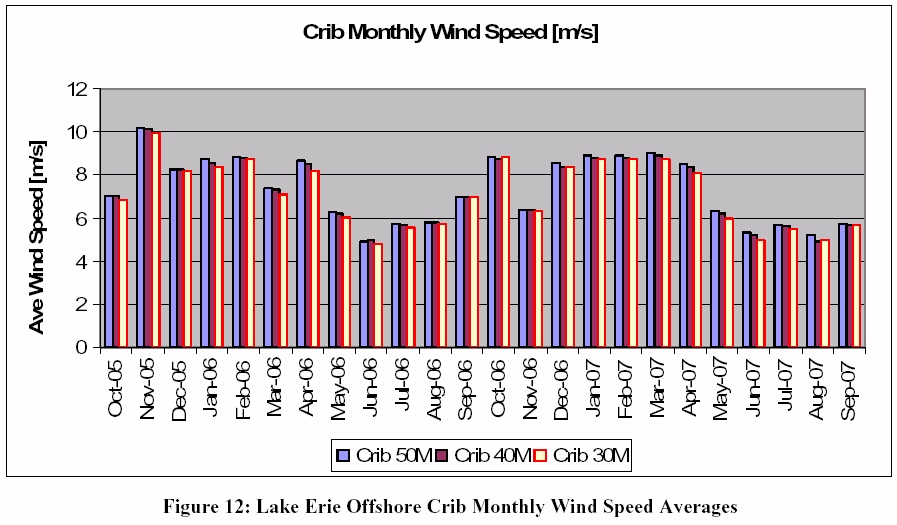
The First Lake Erie Crib Wind Monitoring Report Is Out

Submitted by Charles Frost on Sun, 01/13/2008 - 21:43.

Graph Of Lake Erie Winds At The Crib

( categories: )

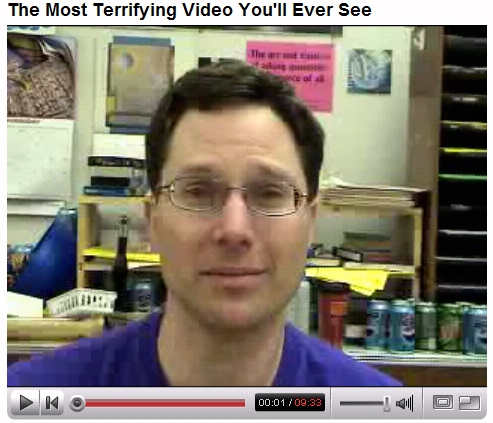
The Most Terrifying Video You'll Ever See!

Submitted by Charles Frost on Thu, 01/03/2008 - 22:50.

Link To A You Tube Video

It's called The Most Terrifying Video You'll Ever See, and it's taking the web by storm. Essentially, it's little more than a high school science teacher named Greg Craven, set up in his home with a whiteboard and a felt-tipped marker.


If They Can Do This In Greenville, Why Not Cleveland???

Submitted by Charles Frost on Mon, 12/31/2007 - 08:10.

If They Can Do This In Greenville, Why Not Cleveland???
Sunday, December 30, 2007

Story of the Year
A year of ups and downs for solar panel manufacturer

rjeltema [at] staffordgroup [dot] com
Assistant News Editor

This year was up and down for Greenville's newest major industry, United Solar Ovonic.

The Auburn Hills-based solar panel manufacturer opened the first of its two Greenville plants in the fall while recording a significant sales increase. United Solar Ovonic's parent company, Energy Conversion Devices (ECD) of Rochester Hills, still fell well short of profitability, however, and two accidents at the first plant caused disruptions to the surrounding area.

ECD also experienced a major shift in management with founder and inventor Stanford Ovshinsky retiring in August followed by Chairman and Chief Executive Officer Robert Stempel in November. They were replaced by former United Technologies Corp. executive Mark Morelli amid a major restructuring effort.

With hopes for the local economy pinned on United Solar Ovonic, the company's quiet opening of the first local plant in Greenville's new industrial park north of VanDeinse Avenue on Nov. 1 was greeted with relief.

Meanwhile, construction is continuing on the second nearly identical plant next door with an opening slated for sometime next summer.

Each plant employs about 200 workers. Michigan Works began the hiring process for 70 workers last June.

Company officials declined to discuss progress on the plants after springtime.

Stempel told the audience during a statewide alternative energy conference in April that two more solar panel plants are "on the drawing board" for the company but would not disclose where they would be built and when they would be officially announced.

He said other cities and states continue making pitches to the company to locate plants in their areas.

"We're down to the final selection stage," Stempel said. "There's a lot of pushing to put the plant here or there. People see the scope of what we're doing and what it could bring for them and obviously they're interested."

He said company officials are pleased with the progress of both Greenville plants, which could bode well for locating the new facilities here. Construction on the second plant is coming along better than the first due to some lessons learned during construction.

"It's looking pretty nice. We're on schedule," Stempel said. "We've had a very good relationship with the city and that certainly is a plus."
 The positive feelings surrounding the opening didn't last long.

A minor explosion in the pump room blew off an exterior wall panel on Building 1 just before 8 a.m. Nov. 21. Emergency responders determined the blast was caused by a "procedural error" when an employee improperly left a valve open. No hazardous materials were released into the air endangering the public.

"It was an overpressure explosion," said United Solar Ovonic Senior Vice President Jay Knoll. "It was caused by a failure to close a valve during a routine system changeover."

All 153 employees inside the building were evacuated. No injuries were reported.

Less than two weeks later, everyone within a one-mile radius of Building 1, including hundreds of people attending Greenville Community Church's morning worship service, were evacuated Dec. 2 after a report of a gas leak at the plant.

"We were in the middle of the service," said Joel Heron, lead pastor at the church. "I was actually preaching at the time."

Greenville Department of Public Safety Director Michael Stuck said residents were able to return to their homes about an hour after being evacuated.

"Their (United Solar Ovonic's) safety control system did exactly what it was supposed to do," he said.

Knoll blamed the mishap on an exhaust stack, used to vent gases between Buildings 1 and 2, springing a leak.

"We're working out the bugs of the plant," he said.
 United Solar Ovonic announced one of its largest sales to date on July 24, a three-year distributor agreement to provide Advanced Green Technologies Inc. in Fort Lauderdale, Fla., with $108 million of photovoltaic solar panels.

"We are convinced that our relationship with Advanced Green Technologies will further successful installations of building integrated solar power systems and demonstrate the use of Uni-Solar products for improved energy self-reliance," said United Solar Ovonic President and Chief Operating Officer Subhendu Guha.

The company also gave a sneak peek into its new residential solar system on a Habitat for Humanity house in Traverse City during the National Governors' Association meetings in July. Governors of several states participated in building a Habitat home powered by Uni-Solar panels.

"United Solar Ovonic's contribution to our project aids us in our mission to build high quality, energy-efficient homes at the lowest possible cost and we are grateful," said Ken Bensen, Michigan's Habitat for Humanity president. "We look forward to seeing Uni-Solar solutions on Habitat homes throughout the world."

Guha said the system will be released to the public soon.
 United Solar Ovonic also expanded overseas in 2007, entering the Chinese marketplace with a joint venture with Tianjin Jinneng Investment Co. (TJIC) of Tianjin, China, to open a photovoltaic solar panel manufacturing facility in the city of 4.5 million people.

The plant will have a capacity of manufacturing enough solar panels annually to generate 30 megawatts of electricity without affecting the company's plans in Greenville.

Guha said the company still plans to produce mile-long rolls of solar panels, cut them into nine- by 14-inch sections and implant electrodes in Greenville. The parts then will be shipped to the Chinese plant or a similar plant in Tijuana, Mexico, to be assembled into strips of solar roof laminates or other products and covered with a protective plastic coating.

He said the China and Mexico operations were on the drawing board well before United Solar Ovonic announced plans to locate in Greenville.

"The Chinese market is going to expand rapidly and we have to be there," Guha said.

Under Chinese trade laws "we cannot sell products in China unless we have a manufacturing presence," he said.
 Still, despite all United Solar Ovonic's growth in production and sales, the company's profits have not been able to keep pace.

United Solar Ovonic posted a $2 million profit for the fiscal year that ended June 30, down from $8.2 million a yea earlier.

However, sales grew 11 percent during that same span to $91.5 million due to robust European sales and ramping up production capacity. With the addition of a second plant in Auburn Hills, solar panel manufacturing capacity increased from 28 megawatts to 58 megawatts annually. That is expected to triple during the current fiscal year with the addition of both Greenville plants.

"Going forward, improvements in the energy conversion efficiency of our products and our cost-reduction initiatives will drive gross margin improvement," said James Metzger, ECD's executive vice president and chief operating officer.

He said a $19 million grant from the U.S. Department of Energy's Solar America Initiative will help accelerate improvements in products during the next fiscal year and beyond.

United Solar Ovonic projects a sales increase to from $205 million to $225 million over the current fiscal year, more than double that of the previous year.

The first fiscal quarter was a good start.

United Solar Ovonic reported $41.9 million in revenue during the three-month period, which ended Sept. 30. That represents a 76 percent increase over last year's first quarter.

Morelli noted that supply agreements and product commitments for the second quarter exceed United Solar Ovonic's current capacity.

"Our laminates continue to gain momentum in the marketplace, as demonstrated by our growing pipeline of business," he said. "I am encouraged by our opportunities and our progress."

From the Greenville Michigan Daily News: http://www.thedailynews.cc/main.asp?SectionID=2&subsectionID=11&articleID=17864

( categories: )

Trees planted here help streams, rivers, Lake Erie

Submitted by Charles Frost on Fri, 12/28/2007 - 19:52.

Thursday, December 27, 2007

By Rachael Derrick

Brunswick Sun Times

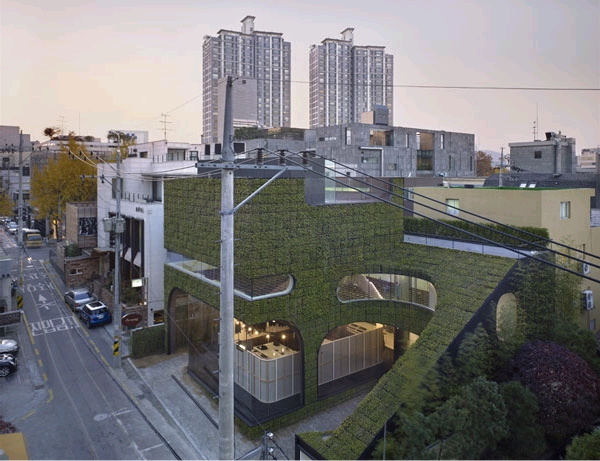
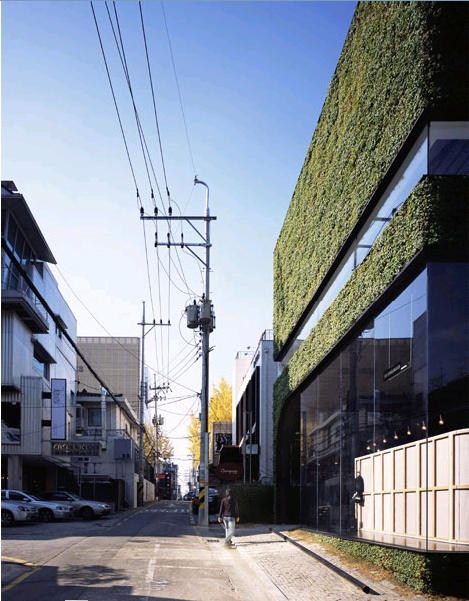
Green Walls On A Shop In Korea

Submitted by Charles Frost on Sat, 12/22/2007 - 16:43.

Green Shop Walls

Green Shop Walls

Tindo Solar Bus

Submitted by Charles Frost on Thu, 12/20/2007 - 22:04.

A Solar Bus

The Adelaide City Council has raised the standard in International sustainability with the introduction of the world’s first solar-powered electric bus.

Pursuing a Cure For an 'Orphan' Ailment

Submitted by Charles Frost on Thu, 12/20/2007 - 21:38.

Pursuing a Cure For an 'Orphan' Ailment

A Doctor Struggles to Develop A Drug for Lead Poisoning; Bypassed by Patient Advocates

By AMY DOCKSER MARCUS
December 18, 2007; Page D1

( categories: )

Speaking of Comics/Cartoons....

Submitted by Charles Frost on Thu, 12/13/2007 - 23:20.

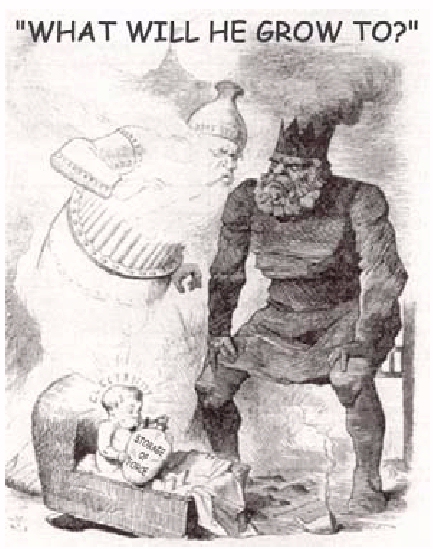
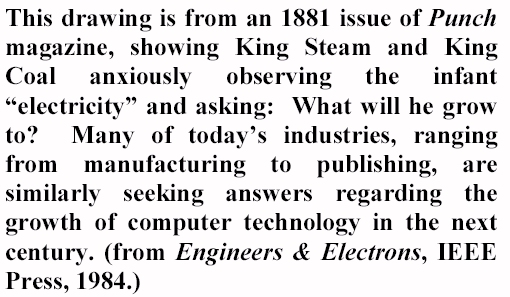
Old Punch Cartoon

Punch Cartoon Caption

A Very Amazing and Inspiring Young Man!!!!

Submitted by Charles Frost on Thu, 12/13/2007 - 19:54.

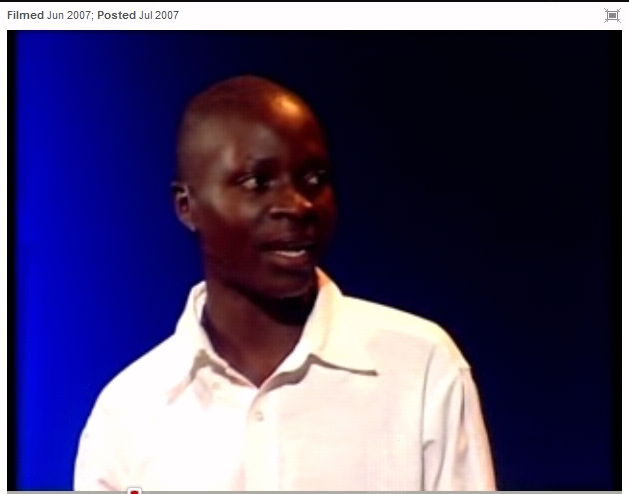
20-year-old William Kamkwamba

A Young Tinkerer Builds a Windmill, Electrifying a Nation
Mr. Kamkwamba's Creation Spurs Hope in Malawi; Entrepreneurs Pay Heed
By SARAH CHILDRESS
December 12, 2007; Page A1
MASITALA, Malawi -- On a continent woefully short of electricity, 20-year-old William Kamkwamba has a dream: to power up his country one windmill at a time.
So far, he has built three windmills in his yard here, using blue-gum trees and bicycle parts. His tallest, at 39 feet, towers over this windswept village, clattering away as it powers his family's few electrical appliances: 10 six-watt light bulbs, a TV set and a radio. The machine draws in visitors from miles around.
 Self-taught, Mr. Kamkwamba took up windmill building after seeing a picture of one in an old textbook. He's currently working on a design for a windmill powerful enough to pump water from wells and provide lighting for Masitala, a cluster of buildings where about 60 families live.
Then, he wants to build more windmills for other villages across the country. Betting he can do it, a group of investors are putting him through school.
"I was thinking about electricity," says Mr. Kamkwamba, explaining how he got hooked on wind. "I was thinking about what I'd like to have at home, and I was thinking, 'What can I do?' "
To meet his family's growing power needs, he recently hammered in a shiny store-bought windmill next to the big one at his home and installed solar panels. He has another windmill still in its box that he'll put up at a house 70 miles away in the capital, Lilongwe, where he now goes to school.
A few years ago, he built a windmill for the primary school in Masitala. He used it to teach an informal windmill-building course. Lately, he has offered to help the village handyman down the road build his own machine.
"Energy poverty" -- the scarcity of modern fuels and electrical supplies in poor parts of the world -- is a subject of great interest to development economists. The windmill at the Kamkwamba family compound, a few brick buildings perched on a hill overlooking the village, has turned it into a stop for the curious: People trekking across Malawi's arid plains drop by. Villagers now regularly make the dusty walk up the hill to charge their cellphones.
The contraption causing all the fuss is a tower made from lashed-together blue-gum tree trunks. From a distance, it resembles an old oil derrick. For blades, Mr. Kamkwamba used flattened plastic pipes. He built a turbine from spare bicycle parts. When the wind kicks up, the blades spin so fast they rock the tower violently back and forth.
Mr. Kamkwamba's wind obsession started six years ago. He wasn't going to school anymore because his family couldn't afford the $80-a-year tuition.
When he wasn't helping his family farm groundnuts and soybeans, he was reading. He stumbled onto a photograph of a windmill in a text donated to the local library and started to build one himself. The project seemed a waste of time to his parents and the rest of Masitala.
"At first, we were laughing at him," says Agnes Kamkwamba, his mother. "We thought he was doing something useless."
The laughter ended when he hooked up his windmill to a thin copper wire, a car battery and a light bulb for each room of the family's main house.
The family soon started enjoying the trappings of modern life: a radio and, more recently, a TV. They no longer have to buy paraffin for lantern light. Two of Mr. Kamkwamba's six sisters stay up late studying for school.
"Our lives are much happier now," Mrs. Kamkwamba says.
The new power also attracted a swarm of admirers. Last November, Hartford Mchazime, a Malawian educator, heard about the windmill and drove out to the Kamkwamba house with some reporters. After the news hit the blogosphere, a group of entrepreneurs scouting for ideas in Africa located Mr. Kamkwamba. Called TED, the group, which invites the likes of Al Gore and Bono to share ideas at conferences, invited him to a brainstorming session earlier this year.
In June, Mr. Kamkwamba was onstage at a TED conference in Tanzania. (http://www.ted.com/index.php/talks/view/id/153) (TED stands for Technology Entertainment Design). "I got information about a windmill, and I try and I made it," he said in halting English to a big ovation. After the conference, a group of entrepreneurs, African bloggers and venture capitalists -- some teary-eyed at the speech -- pledged to finance his education.
His backers have also showered him with new gadgets, including a cellphone with a hip-hop ringtone, a laptop and an iPod. (Kelly Clarkson's "Breakaway" is his current favorite tune.) They rewired his family's house, replacing the homemade switches he made out of flip-flop parts.
They're paying for him to attend an expensive international academy in the capital, Lilongwe, for children of expatriate missionaries and aid workers. But his teacher, Lorilee MacLean, sometimes worries about his one-track mind and about all the attention he's getting.
"I don't want him to be seen as William the windmill maker," said Mrs. MacLean one day recently. While Mr. Kamkwamba quietly plowed through homework, his classmates were busy gossiping and checking their Facebook profiles.
Mr. Kamkwamba has taught his family to maintain the windmill when he's away at school. His sister Dolice and cousin Geoffrey can quickly scamper up the tower, as it sways and clatters in the wind, to make repairs.
A steady stream of curiosity seekers make the trip to the Kamkwamba compound -- mostly unannounced. The visits are unsettling for the reserved family.
One afternoon, a pair of Malawian health workers came by to get a closer look and meet Mr. Kamkwamba. The family scattered, leaving the pair -- dressed in shirts and ties for the occasion -- standing awkwardly in the yard.
"We have heard about this windmill, and so we wanted to see it for ourselves," one finally spoke up. Mr. Kamkwamba came around to shake hands, then quickly moved away to show another visitor around.
Jealousy is a social taboo in these parts, but Fred Mwale, an educator who works in Wimbe, the area that includes Masitala, says the family's new prosperity is causing some tensions.
"People do desire what is happening here. They come, and admire," he says. "They think that they might get the same support if they build a windmill."
Down the hill, the village handyman started building his own windmill after secretly studying Mr. Kamkwamba's. A gust of wind blew the blades off the man's first few attempts. Mr. Kamkwamba offered to help him rebuild, but got no reply.
"I'm waiting to see if he's serious," Mr. Kamkwamba says.
 

( categories: )

GEO Broadcast - The Amish Go Solar (Weather Channel Broadcast)

Submitted by Charles Frost on Thu, 12/13/2007 - 19:38.
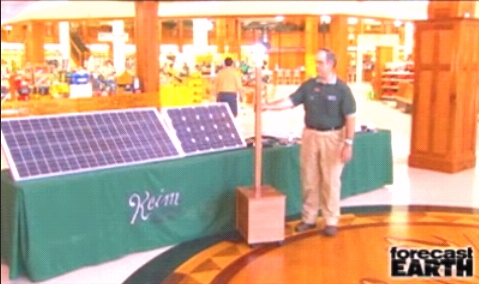
Amish DC Lighting System

Fascinating....

( categories: )

'Tropics expand' as world warms

Submitted by Charles Frost on Sun, 12/09/2007 - 08:18.

'Tropics expand' as world warms


Climate change is causing the tropics to widen, with possible impacts on the global food supply, research suggests.


Bad Air "Fresheners"

Submitted by Charles Frost on Sun, 12/09/2007 - 08:02.
( categories: )

E-mail today from the American Solar Energy Society:

Submitted by Charles Frost on Fri, 12/07/2007 - 12:59.

E-mail today from the American Solar Energy Society:

Energy Bill Passes the House!
- Please Call Your Senator Today -
 
This is the moment of truth. The time for action is right now.

( categories: )

Climate Change and Great Lakes Water Resources

Submitted by Charles Frost on Wed, 12/05/2007 - 21:25.

Kids By The Lake

Climate Change and Great Lakes Water Resources (a 44 page PDF), a new report from the National Wildlife Federation, looks at threats to the Great Lakes from global warming and water diversion, and concludes that states need to approve the Great Lakes-St. Lawrence River Basin Water Resources Compact.

( categories: )

The Wall on Woodbine

Submitted by Charles Frost on Mon, 12/03/2007 - 21:12.

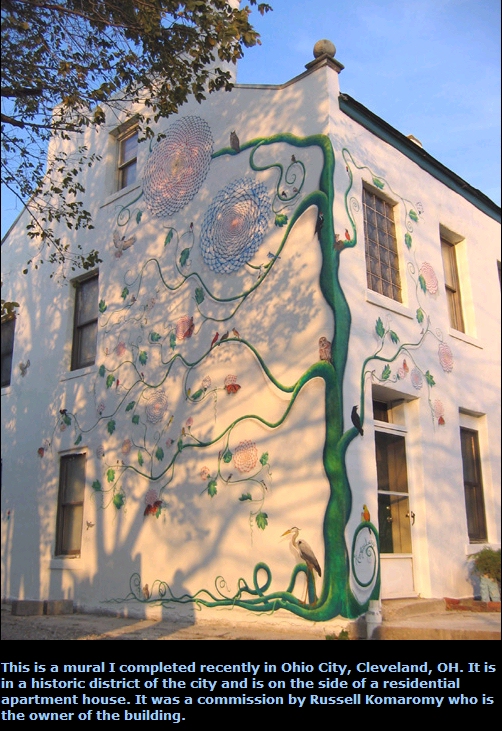
Wall Mural


(Continued from the web site)
“This was truly a wonderful experience for so many reasons. First, I learned a lot about murals, especially since I've never done one outside before! I also got really good at climbing scaffolding with an armload of painting stuff. But besides all of that, I saw personally what an impact positive public art makes in a community. Because I was there working on it for 6 weeks I got to see a lot of the people of the neighborhood and no matter what their lives were like all the rest of the time, for the few minutes that they stopped to look at the mural or to talk to me, they were happy. I got to see the people driving by slow down and crane their necks around to see what was on the side of the building and many times people would shout compliments or encouragements out their window as they passed by. The experience gave me a first hand look at how art affects people's lives. I want to make the distinction that most of the people who witnessed my mural getting painted and who will see it forever afterwards are the not the type of people who get exposed to art in either museums or galleries. They were in no way conditioned to see things in a certain way or with a certain attitude. The reaction I got from people was a pure unfiltered response from the heart.
Art has the ability to communicate to all of us through very simple means. People respond to things that are aesthetically pleasing and beautiful and when art can embody those basic principles it has the capability to reach out into the soul of Everyman and begin to awaken our higher self. Because art has the means to become the key, more people need to be exposed to art, not just any art, but art that can establish that raw and pure connection to our very core. This, in my opinion is the goal of public art. Our world today needs all the positive influence it can get and having something available in the community that can passively affect everyone that walks or drives by it is essential.”

From: http://www.transcendentbird.com/about12.html  

( categories: )

How Big Is "Big??? How Small Is "Small"???

Submitted by Charles Frost on Tue, 11/27/2007 - 21:32.

You can see for yourself... (the good stuff is after the intro which runs about 45 seconds or so)

Powers of Ten - and old video. I have a copy of it in book form. I like the book better, but I can't post a book here :-)

( categories: )

Activists Start Googling

Submitted by Charles Frost on Tue, 11/27/2007 - 20:54.

Internet Maps Illustrate Environmental Woes

By KEVIN J. DELANEY
November 15, 2007; Page B4

Trees For Every Purpose

Submitted by Charles Frost on Wed, 11/21/2007 - 20:34.

Trees For Every Purpose


By Therese Ciesinski

The best time to plant a tree was 20 years ago. The second-best time is now. - Chinese proverb

Add beauty and value to your home, provide essential food and shelter for wildlife, and help reduce carbon in the atmosphere in one simple step: planting a tree. And right now, autumn, is the time to plant because warm soil coaxes new growth from roots, while cool nights and rainy skies minimize evaporation and water stress.

PLoS ONE - The Public Library Of Science

Submitted by Charles Frost on Sun, 11/18/2007 - 08:24.

PLoS ONE is an international, peer-reviewed, open-access, online publication. PLoS ONE welcomes reports on primary research from any scientific discipline. PLoS ONE is published by the Public Library of Science (PLoS), a nonprofit organization. PLoS ONE's start-up phase is supported by a grant from the Open Society Institute.

Flying on solar wings: (the late) Paul MacCready on TED.com

Submitted by Charles Frost on Thu, 11/15/2007 - 23:55.

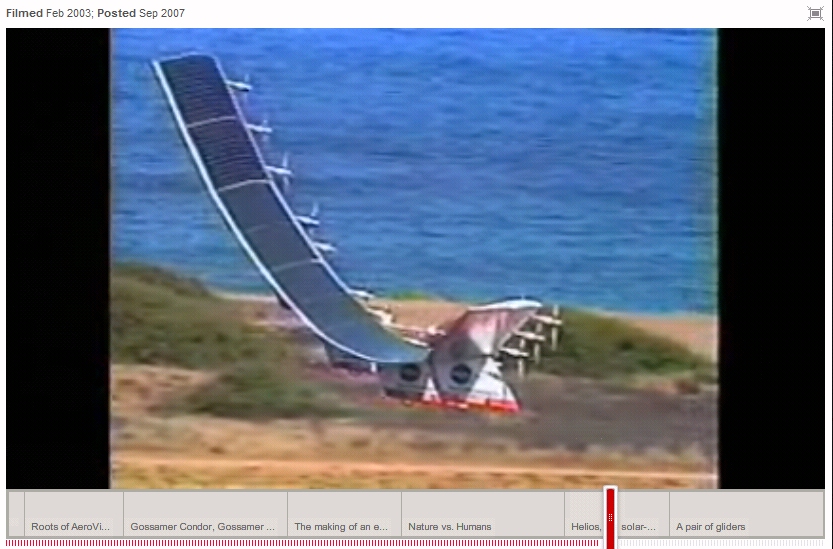
Helios - A Solar Powered Airplane

An amazing (and quite funny) man, who invented many amazing things, including wind turbines and the EV1 Electric car. The video runs about 21 minutes, so get your popcorn first.

Terraforming 101

Submitted by Charles Frost on Mon, 11/12/2007 - 21:58.

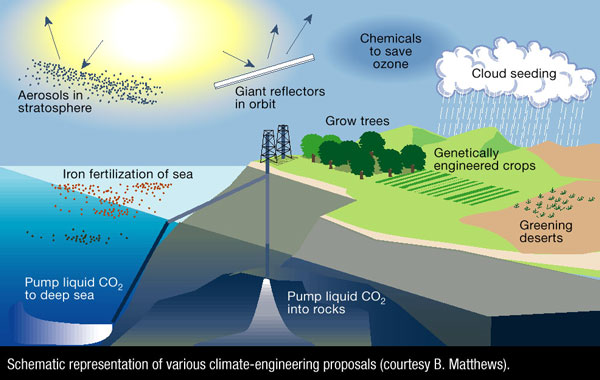
Diagram of some climate fixing ideas

Giving Climate Change a Kick

By Eli Kintisch
ScienceNOW Daily News
9 November 2007

CAMBRIDGE, MASSACHUSETTS--Top climate scientists have cautiously endorsed the need to study schemes to reverse global warming that involve directly tinkering with Earth's climate. <--!break--> Their position on geoengineering, which will likely be controversial, was staked out at an invitation-only meeting that ended here today. It's based on a growing concern about the rapid pace of global change and continued anthropogenic emissions of greenhouse gases.

"In this room, we've reached a remarkable consensus that there should be research on this," said climate modeler Chris Bretherton of the University of Washington, Seattle, during a morning session today. Phil Rasch, a modeler with the University Corporation for Atmospheric Research in Boulder, Colorado, underscored the point. "We're not saying that there should be geoengineering, we're saying there should be research regarding geoengineering." No formal statement was released at the meeting, which was organized by Harvard University and the University of Calgary, but few of the 50 scientists objected to the idea.

The field of geoengineering has long been big on ideas but short on respect. Some of the approaches that researchers have dreamed up include launching fleets of space-based shades to dim the sunlight hitting Earth or altering the albedo of the ocean with light-colored reflectors. Perhaps the best-known idea is to pump aerosols into the stratosphere to mimic the cooling effect of volcanoes. But there's been scant support from mainstream scientists, many of whom fear that even mentioning the g-word could derail discussion of carbon-emissions cuts. Others worry that technological tinkering might backfire. "I just accepted on faith as an environmental scientist that this had to be a bad idea," said Harvard's Scot Martin, who said he was reluctantly coming around.

Harvard geochemist Daniel Schrag and physicist David Keith of the University of Calgary thought that geoengineering deserved a closer look (Science, 26 October, p. 551). In an opening presentation yesterday, Schrag explained that extensive, rapid melting of arctic sea ice (ScienceNOW, 2 May) and the fact that the world's 2005 and 2006 carbon emissions from fossil fuels were higher than predictions by the Intergovernmental Panel on Climate Change are forcing the hands of climate scientists. Schrag also fears that when countries are faced with the prospect of even more drastic environmental change, they will turn to geoengineering regardless of whether the consequences are known. "We're going to be doing this if we're afraid of something really bad happening, like the Greenland ice sheet collapsing," he said.

The degree of scientific uncertainty was clear throughout the 2-day meeting. In a discussion of existing models, climate modeler Ken Caldeira of the Carnegie Institution of Washington in Stanford, California, concluded that reducing the intensity of sunlight hitting Earth by about 2% could "markedly diminish" the massive warming effects of an atmosphere with a carbon dioxide content of 560 parts per million (ppm). (The current level is about 385 ppm.) But over lunch, researchers debated the analysis. "You know you can get some sea ice back," Caldeira said to David Battisti of the University of Washington, Seattle. "I don't know that," Battisti retorted, explaining that Caldeira's model assumed a so-called slab ocean, which does not include the heat circulation patterns that help determine the fate of polar ice.

And then there are the risks. Harvard paleoclimate scientist Peter Huybers told his colleagues during one session that understanding of the world's climate may not be sufficient to properly wield geoengineering tools. "We should be humble about how much we know about the climate system," Huybers said.

Most of the discussion focused on whether to jump-start what has been an anemic research agenda with no public financing. Some participants said that they were spurred into action by a paper that appeared in Climatic Change last year, in which Nobelist Paul Crutzen called for geoengineering research (Science, 20 October 2006, p. 401). Others were swayed more recently. Just 2 weeks ago, modeler Raymond Pierrehumbert of the University of Chicago in Illinois, writing on the RealClimate blog, compared discussing geoengineering to "having a shiny new toy" and told climate scientists to "get back to the serious business of trying to figure out how to economically reduce global CO2 emissions." At the meeting, however, Pierrehumbert urged scientists to study the problem as a supplement to cutting greenhouse gas emissions, although he called for a 10-year moratorium on any geoengineering. "To the extent I've changed my mind a little bit," Pierrehumbert explained to Science, the reason is the ease with which countries could embark on geoengineering.

Harvard climate researcher James Anderson told the group that the arctic ice was "holding on by a thread" and that more carbon emissions could tip the balance. The delicacy of the system, he said "convinced me of the need for research into geoengineering," Anderson said. And 5 years ago? "I would have said it's a very inappropriate solution to the problem."

From: http://sciencenow.sciencemag.org/cgi/content/full/2007/1109/1?rss=1

Photo from: http://www.nature.com/nature/journal/v409/n6818/images/409420aa.2.jpg

Taking Back The City Dept: Public Fountains

Submitted by Charles Frost on Sun, 11/11/2007 - 20:15.

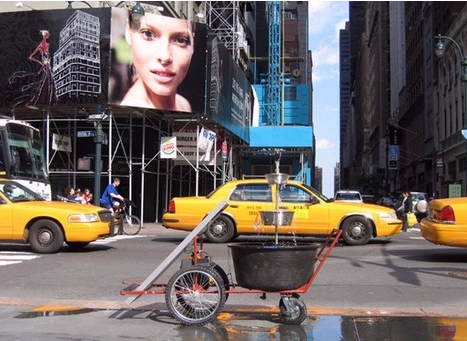
Solar Fountain in Crosswalk

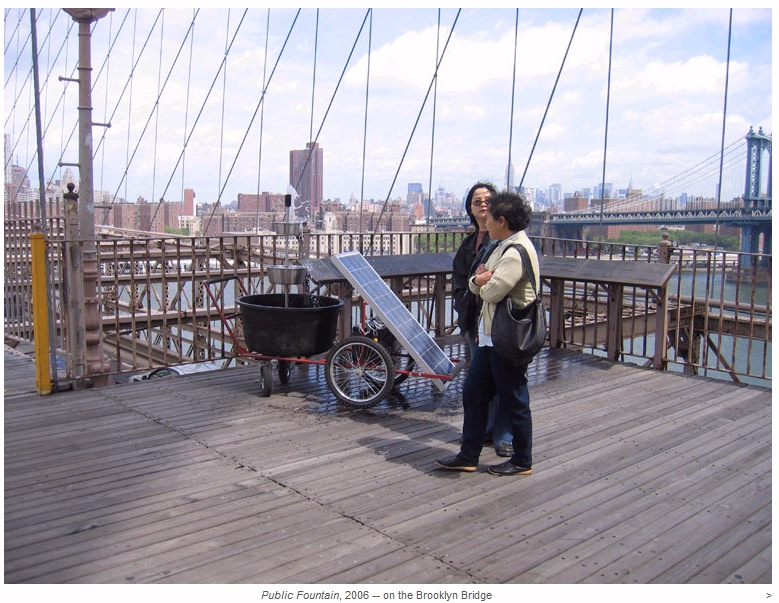
Solar Fountain On Brooklyn Bridge

( categories: )

'Ya Don't Want To Mess With Mother Nature....

Submitted by Charles Frost on Fri, 11/09/2007 - 18:53.

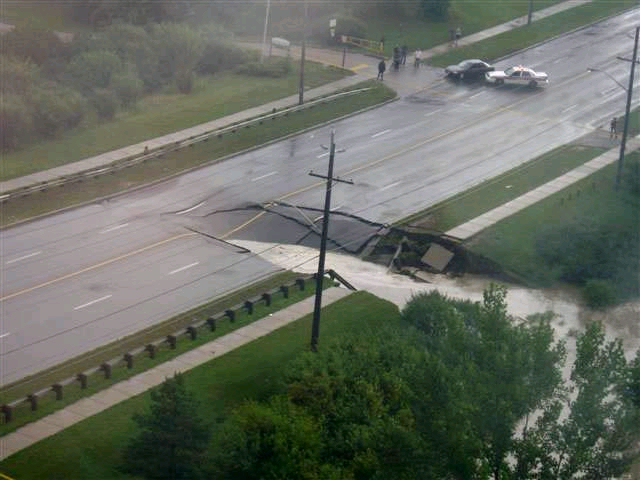
River at road

See the complete set of 6 photos at: http://m3.lackcolor.com/piles/?s=naturesnewriver

( categories: )